The Most Dangerous Lies Are the Ones We Tell Ourselves (The Stories We Tell Ourselves - Part 1)
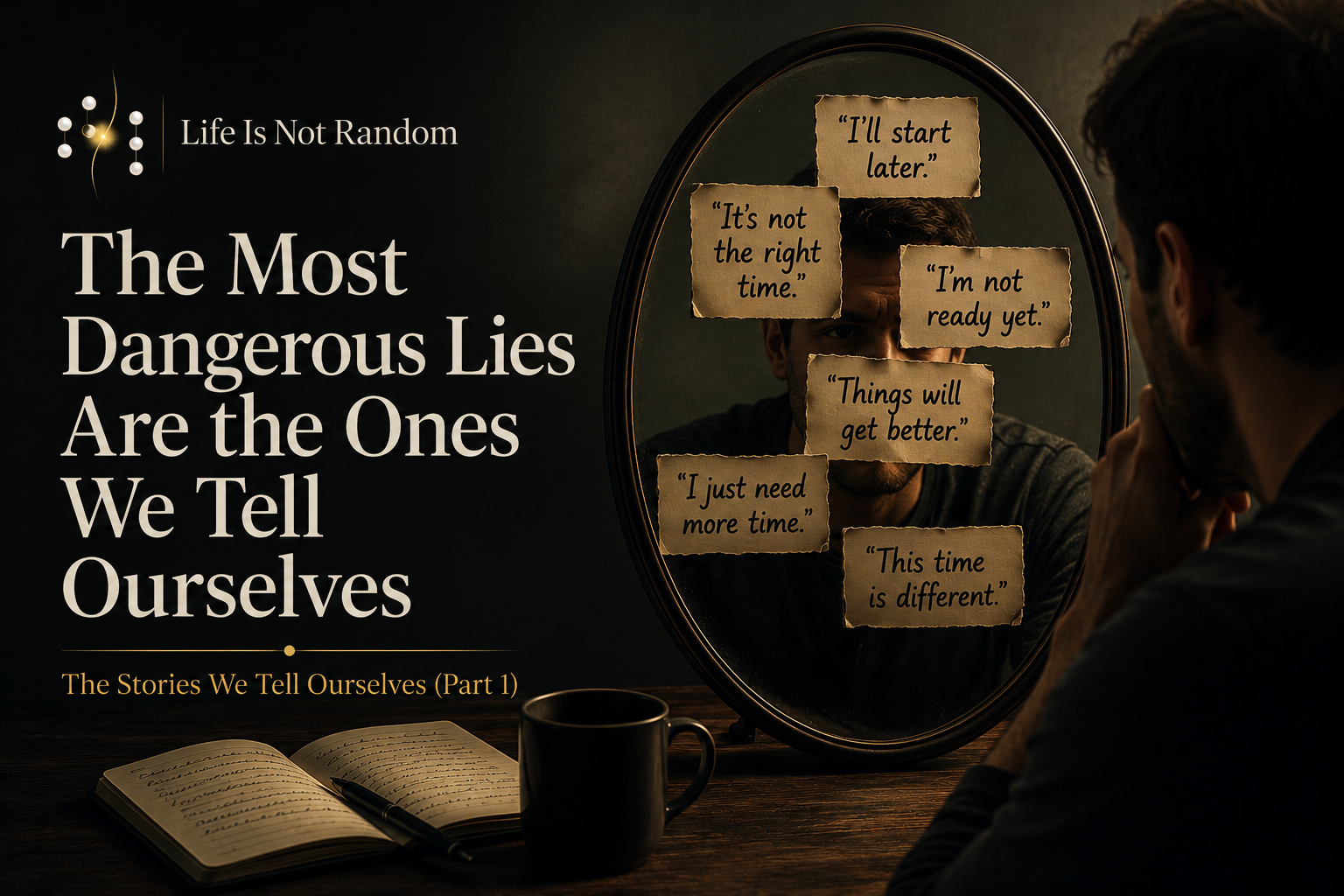
Why do intelligent people ignore obvious warning signs, stay in situations they know aren't working, or delay decisions they have already made?
For a long time, I assumed the answer was a lack of information. People simply didn't know enough. If they had more facts, more experience, or better advice, they would make better choices.
Over the years, I've become less convinced by that explanation.
Many of the biggest mistakes I've seen—both in my own life and in the lives of others—didn't happen because the truth was hidden. They happened because a more comforting story was easier to believe.
Looking back, some of my most difficult decisions followed a similar pattern.
I would tell myself I was still thinking. Still evaluating. Still gathering information. From the outside, it looked responsible. It looked thoughtful.
In reality, I often already knew the answer.
I just didn't like it.
So instead of making the decision, I started negotiating with it.
I would look for another perspective. Another opinion. Another piece of evidence that might somehow change what I already suspected was true. The process felt productive, but in hindsight, I wasn't searching for clarity.
I was searching for permission to keep believing a different story.
Once I noticed this in myself, I started seeing it everywhere.
A friend stays in a relationship long after they know something is wrong. An entrepreneur continues investing time and money into an idea that has stopped working. An investor ignores risks that would seem obvious to an outsider.
At first glance, these situations appear completely different. But beneath the surface, they often share something in common.
The facts are competing with a story.
And stories are surprisingly powerful.
The person in the struggling relationship isn't focused on what is happening today. They're focused on the version of tomorrow they've imagined. The entrepreneur isn't looking at the business as it is. They're looking at what it could become. The investor isn't evaluating the risk objectively. They're imagining the reward.
None of these stories are irrational.
In fact, that's what makes them dangerous.
Most self-deception doesn't begin with a lie. It begins with a possibility. A hope. A future we want badly enough that we start filtering reality through it.
Over time, the story becomes a lens. Information that supports it feels important. Information that challenges it feels temporary, incomplete, or easy to explain away.
I've done this more times than I'd like to admit.
There were opportunities that felt too perfect. Warning signs that seemed too small. Questions that deserved attention but were pushed aside because they threatened a future I wanted to believe in.
The strange thing is that clarity usually arrives later.
Months later.
Sometimes years later.
We look back and wonder how we missed something that now appears obvious.
But maybe we didn't miss it.
Maybe we noticed it, then quietly explained it away.
Maybe the problem wasn't a lack of information.
Maybe the story was simply louder.
The older I get, the less interested I am in understanding what people believe and the more interested I am in understanding the stories behind those beliefs.
Because that's where many important decisions are really made.
Not in the facts.
Not in the evidence.
But in the private conversations we have with ourselves.
And perhaps that's why the most dangerous lies are rarely the ones told to us.
They're the ones we keep telling ourselves.
— Pushpender Kaushik
Author | Life Is Not Random
Exploring the hidden patterns behind behaviour, decisions and life.
🌐 lifeisnotrandom.com