I Thought Life Was Random. Then I Found Something in Manali I Couldn’t Ignore.
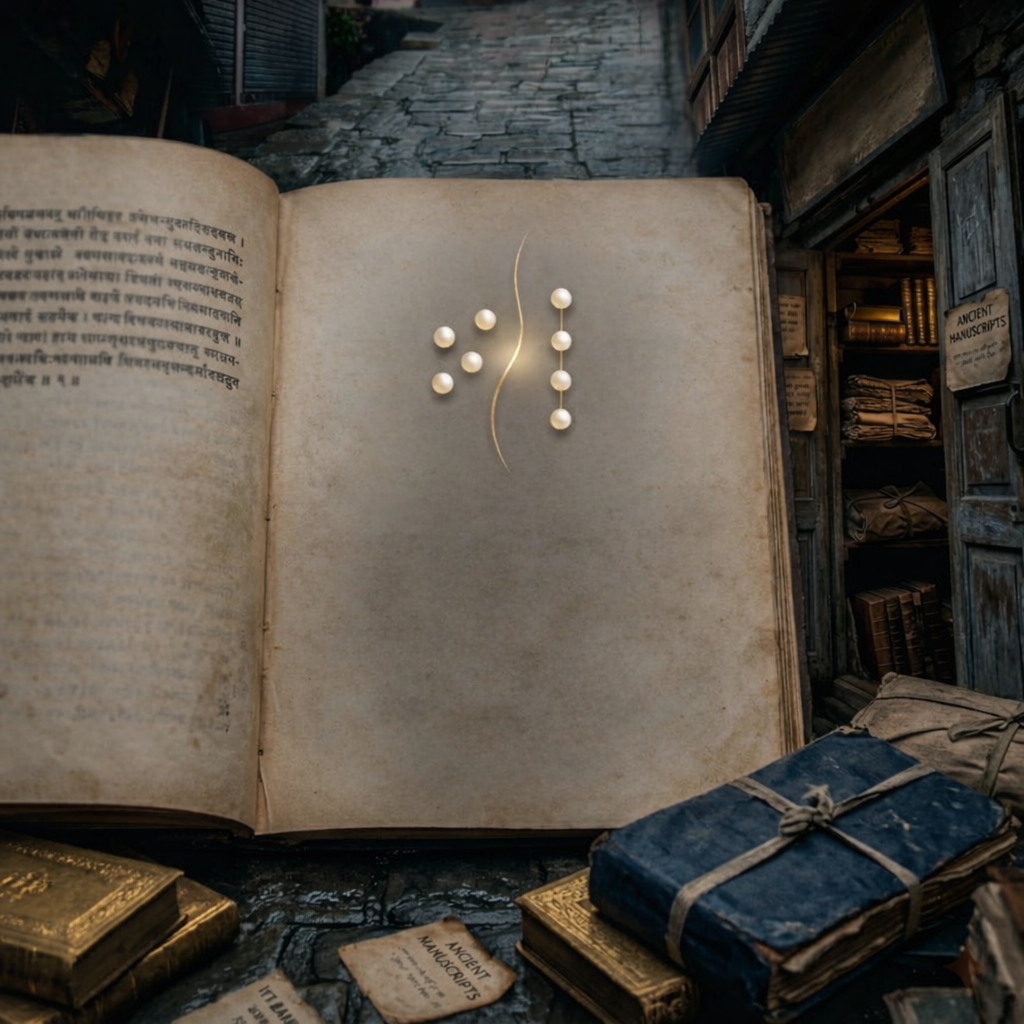
A forgotten manuscript, a repeated mistake, and the question that changed how I see everything.
It was the summer of 1994.
I was 18. Fresh out of school.
On a budget trip to Manali with friends — the kind where money is limited, but everything else feels infinite.
One afternoon, I wandered away.
Into the back lanes of old Manali.
Away from cafés and crowds.
Into a narrow space that looked less like a shop and more like something forgotten.
Dusty shelves. Faded spines.
The smell of old paper that feels like it belongs to another time.
That’s where I saw it.
A cloth-wrapped bundle, tucked under a broken wooden plank.
Old. Sealed with age.
The shopkeeper glanced at me.
“That’s been lying there forever. Probably Sanskrit. Take it if you want — no one’s asked about it.”
I took it.
I didn’t know then…
that this moment would stay with me for the next three decades.
I took it to a retired Sanskrit professor in Delhi.
He spent a long time with it before saying anything.
“This is not just a religious text,” he said.
“It reads like a guide — for life… and for commerce.
Written partly in Sanskrit for scholars… and partly in Prakrit — the language of traders.”
The first line he translated stopped me.
“Lost wealth can be regained. But lost wisdom is never recovered.”
I was 18.
I had no wealth to lose.
But something about that line didn’t leave me.
It stayed — quietly — like a question waiting for its time.
The years that followed looked like progress from the outside.
I built businesses.
Scaled them. Lost some. Rebuilt again.
At one point, I was running a food brand across 60 outlets in 10 states.
But underneath all of that… something else was happening.
The same mistake — repeating.
Choosing partners based on who had money…
instead of who brought something I didn’t.
Different person.
Different company.
Different year.
Same friction.
Same outcome.
For a long time, I called it bad luck.
Because that’s what we do when we don’t see the pattern.
Then one night — years later — I found myself reading again.
Become a Medium member
And that old feeling returned.
Not an answer.
A question.
What if it is not random?
What if the pattern itself is the instruction?
That question didn’t change my life overnight.
It changed how I looked at it.
And once that shift happens…
you start noticing things you didn’t notice before.
A conversation that feels new —
but ends exactly like the last one.
A decision that feels right —
but leads you back to a place you’ve already been.
A problem you think is external —
but somehow follows you into completely different environments.
Different faces.
Same structure.
Most people miss this.
Because life changes just enough
to create the illusion of progress.
But underneath…
something stays consistent.
After years of watching this closely, one thing became clear:
Repeating situations are not accidents.
They start to look like signals.
Not there to punish.
Not there to test.
Just something…
waiting to be seen clearly.
You see it in ways most people ignore:
The same kind of relationship… with a different person.
The same financial pressure… even with higher income.
The same feeling of being stuck… despite changing everything externally.
It looks like life is changing.
But something underneath… isn’t.
The moment you stop calling it coincidence,
something shifts.
Not outside.
Inside first.
And from there —
everything starts to look different.
That manuscript I found in Manali…
was not the answer.
It was the beginning of a question
I’ve been exploring ever since.
That exploration eventually became a book — Life Is Not Random.
Not a self-help system.
Not a philosophy to follow.
Just a way to give language
to something most people already sense…
but haven’t fully seen.
If something in this feels familiar…
that’s not coincidence.
That’s the moment you start noticing.
— Pushpender Kaushik
Exploring patterns in business, finance, and life
🌐 lifeisnotrandom.com