I Didn't Ignore the Signs. I Just Didn't Recognize Them.
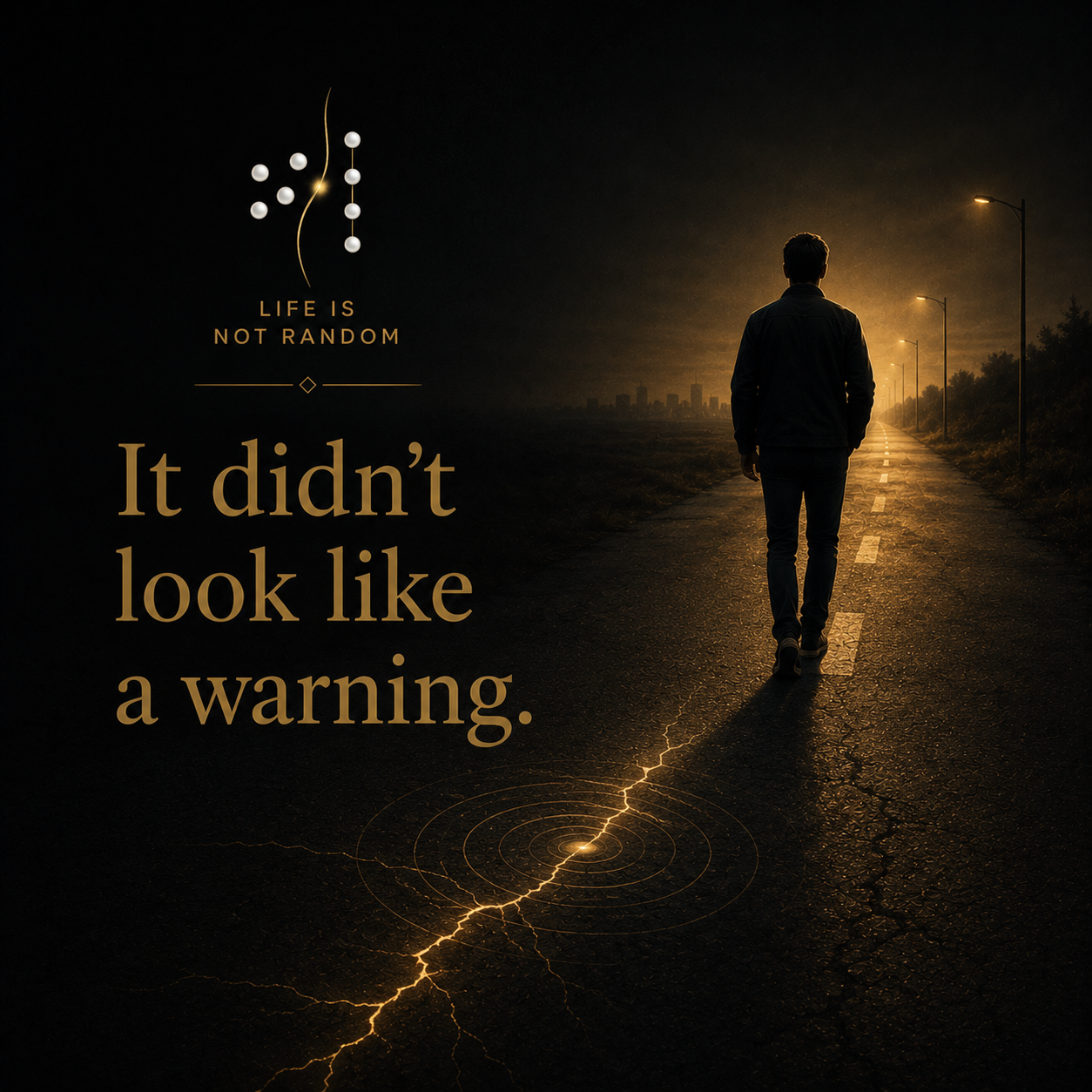
Not every warning looks like a warning.
There’s a moment in almost every decision
where something feels slightly off.
Not wrong enough to stop.
Not clear enough to explain.
Just… a small hesitation.
Most of us have felt it.
We just don’t always know what to do with it.
I’ve felt that moment many times.
When I started my career, everything looked right on paper.
A stable path.
A predictable future.
The kind of choice that made sense to everyone around me.
Still, somewhere inside — something didn’t feel fully aligned.
But I didn’t question it.
Because nothing looked wrong.
So I moved forward.
Later, I made decisions that also looked completely logical.
Plans that promised growth.
Opportunities that seemed safe.
People around me were doing the same things.
The numbers made sense.
But again — there was that small pause.
That feeling you can’t quite name.
And again, I moved past it.
Not intentionally.
Not out of carelessness.
But because everything on the surface looked fine.
More than fine.
It looked right.
That’s the thing about signs.
They rarely arrive clearly labeled.
They don’t come with explanations.
They don’t stop you at the door and say —
wait, you’ve been here before.
They arrive as a feeling.
Quiet.
Subtle.
Easy to explain away.
And we’re not trained to trust that.
We’re trained to trust what looks right.
The numbers.
The logic.
The external validation.
So we follow what we can see —
and ignore what we can only sense.
The situation looked new.
Different.
Better.
So the mind treated it as something new.
A fresh start.
A better version of before.
Only later did I realize —
it wasn’t new.
It was the same pattern.
Just wearing a different face.
And that small feeling I had set aside —
was the only part of me that already knew.
This is what I mean when I say
I didn’t ignore the signs.
I just didn’t recognize them as signs.
There’s a difference.
Ignoring means you saw it clearly — and still moved ahead.
Not recognizing means
you didn’t yet have the awareness
to understand what you were feeling.
So you moved forward.
Not out of weakness.
Out of not knowing.
Recognition doesn’t come instantly.
It builds.
The first time that feeling appears —
it’s too quiet to trust.
The second time —
you notice it, but override it.
The third time —
something feels familiar.
Not the situation.
The feeling inside the situation.
That’s when something shifts.
Not dramatically.
But the next time that small hesitation appears —
you pause.
A little longer than before.
And instead of moving ahead immediately,
you ask:
Have I felt this before?
That question doesn’t always give answers.
But it changes how you move.
More slowly.
More honestly.
More aware of what’s happening inside
than what looks right outside.
The signs were always there.
In the decisions I made.
In the opportunities I said yes to.
In the moments that later felt familiar in the wrong way.
They were never hidden.
I just didn’t know what I was looking at.
And maybe that’s what experience really teaches.
Not how to avoid mistakes.
But how to recognize the feeling
that asks you to pause.
— Pushpender Kaushik
Exploring patterns in business, behaviour, and life
🌐 lifeisnotrandom.com